
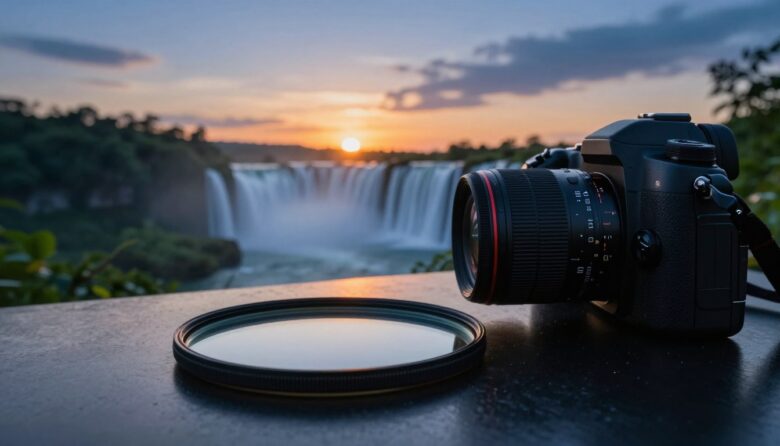
A 10-stop neutral density filter makes it possible to use dramatically longer shutter speeds in daylight. Moving water can become smooth, clouds can form directional streaks, passing people may fade from a city scene, and moving traffic can turn into soft visual traces. The filter does not create a professional image by itself. Strong long-exposure …

A bright outdoor scene can make it difficult to use the wide aperture needed for a softly blurred background. An ND filter solves this exposure problem by reducing the light entering the lens while allowing the photographer to keep the aperture, ISO, and flash-sync settings required for the intended look. The filter does not create …
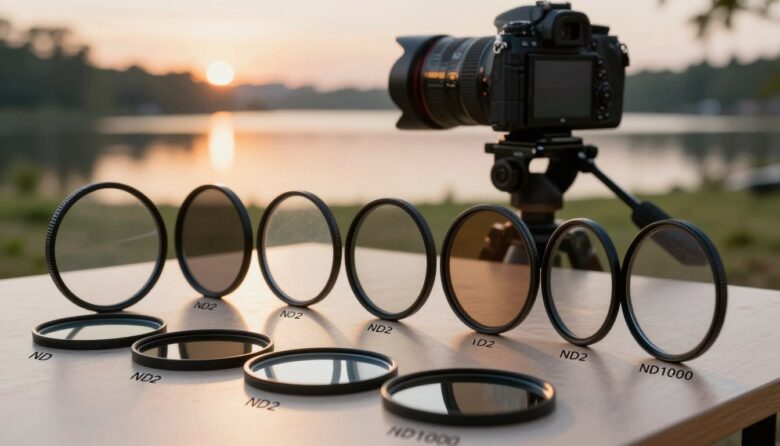
ND filter names can look confusing because manufacturers may describe the same strength using stops, a filter factor, or optical density. An ND8 filter, for example, is normally a three-stop filter—not an eight-stop filter. Once the three naming systems are separated, the numbers become much easier to understand. This guide explains the progression from ND2 …

Circular polarizing and neutral density filters can both improve landscape photographs, but they solve different problems. A circular polarizer controls selected reflections and glare. An ND filter reduces the overall amount of light entering the lens so the photographer can use a longer shutter speed or wider aperture. Confusing the two can lead to disappointing …

The 180-degree shutter rule is a practical starting point for controlling motion blur in video. It links exposure time to frame rate so moving subjects retain a familiar balance between definition and blur. Bright conditions can make that exposure time difficult to maintain. An ND filter reduces incoming light so the camera can preserve the …