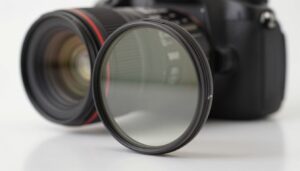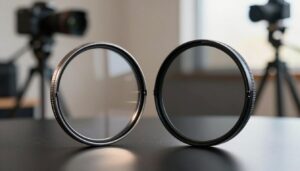
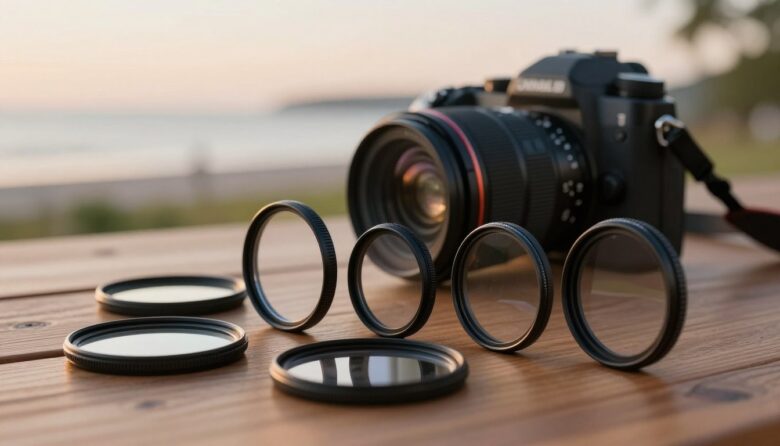
An affordable ND filter can be a useful exposure tool, but a low price does not automatically make a filter good value. The real cost includes any loss of sharpness, difficult color correction, flare, uneven density, mechanical vignetting, or replacement purchases caused by choosing the wrong size or strength.
The best budget option is therefore not always the least expensive filter on a product page. It is the filter that provides the density you actually need, fits your lenses efficiently, behaves consistently enough for your work, and avoids features you will never use.
Best overall value for fixed-ND photography: a three-filter set containing approximately 3, 6, and 10 stops covers far more situations than a random collection of similar densities.
Best value for everyday video: a limited 1–5 stop variable ND with end stops is usually safer and more practical than a very broad 1–9 or 1–10 stop budget VND.
Best way to reduce total cost: buy one filter in the largest practical diameter and use direct step-up rings on lenses with smaller front threads.
Price note: Filter prices change by diameter, country, retailer, and temporary promotion. This guide compares product design and kit usefulness instead of ranking filters by one short-lived sale price.
Budget ND Filters Worth Considering
HOYA ND Essentials Filter Kit
This set combines ND8, ND64, and ND1000 filters, corresponding to 3, 6, and 10 stops. That progression covers moderate motion blur, longer waterfall and coastal exposures, and strong daylight long exposures without requiring a variable filter to operate near an extreme setting.
It is a practical first kit for photographers who want predictable fixed densities rather than continuous adjustment. Front filter threads also allow a compatible cap or another accessory to be attached, although unnecessary stacking should still be avoided.
Consider it when: your main interests are landscapes, waterfalls, architecture, travel, or learning long-exposure photography.
K&F Concept Nano-X ND2–ND32
The limited ND2–ND32 range is useful for outdoor video, portraits at wide apertures, travel, and general exposure control. K&F specifies optical glass, nano coating, an aluminum frame, and a slim design.
A 1–5 stop range does not replace a strong 10-stop filter for long exposures, but it covers the area where many filmmakers and hybrid creators need the most flexibility.
Consider it when: you need fast adjustments in changing daylight and want to avoid the greater artifact risk associated with extremely broad VND ranges.
NEEWER True Colors ND2–ND32
NEEWER’s limited-range VND provides ND2, ND4, ND8, ND16, and ND32 positions within a 1–5 stop range. The frame includes a control tab that can make density adjustments easier when filming.
The manufacturer lists HD optical glass, coatings on both sides, an aluminum frame, a case, and a cleaning cloth. The control tab can interfere with some lens hoods, so hood compatibility should be checked before purchase.
Consider it when: you want an accessible complete package for learning video exposure or outdoor portrait work.
Tiffen Digital ND Filter Kit
This kit contains ND 0.6, ND 0.9, and ND 1.2 filters, corresponding to 2, 3, and 4 stops. These moderate strengths are useful for wide-aperture portraits, ordinary daylight video, flash exposure control, and shorter motion effects.
It does not include the stronger 6-stop or 10-stop densities commonly used for dramatic daylight long exposures. Its strengths make more sense for creators who need controlled reductions without turning a scene extremely dark.
Consider it when: your work involves people, filmmaking, flash, or moderate rather than multi-minute exposures.
K&F Concept Nano-X ND1000
A single fixed ND1000 is a more focused purchase than a large kit when your main goal is smoothing water, creating cloud trails, or reducing moving people in daylight.
The Nano-X version is listed with a slim frame, optical glass, and 28-layer coatings designed to reduce reflections and improve resistance to water, oil, fingerprints, and surface contamination.
Consider it when: you already understand long-exposure technique and do not need several lighter filter strengths.
Urth Variable ND2–ND32 Plus+
Urth’s Plus+ model combines a limited 1–5 stop range with hard stops at both ends, 20-layer coating, SCHOTT B270 glass, and a 6061 aluminum frame.
It is not necessarily the lowest-cost option in every diameter, but it represents a sensible step up for creators who want a documented hard-stop design and a broad selection of available thread sizes without moving immediately into a premium cinema system.
Consider it when: you use ND regularly and prefer spending slightly more on one primary VND rather than replacing an entry-level filter later.
Quick Comparison
| Product | Filter type | Documented range | Best suited to | Main limitation to consider |
|---|---|---|---|---|
| HOYA ND Essentials Kit | Three fixed filters | 3, 6, and 10 stops | Landscapes, travel, long exposure | Density changes require swapping filters |
| K&F Nano-X ND2–32 | Variable ND | 1–5 stops | Video, portraits, changing daylight | Not strong enough for most dramatic daylight long exposures |
| NEEWER True Colors ND2–32 | Variable ND | 1–5 stops | Beginners, travel, hybrid shooting | Control tab may prevent use of the original hood |
| Tiffen Digital ND Kit | Three fixed filters | 2, 3, and 4 stops | Portraits, flash, moderate video filtration | No strong 6-stop or 10-stop filter included |
| K&F Nano-X ND1000 | Fixed ND | 10 stops | Water, clouds, architecture, long exposure | Too strong for many ordinary video and portrait situations |
| Urth ND2–32 Plus+ | Variable ND | 1–5 stops | Frequent video and portrait use | Higher cost than basic entry-level VND options |
No product in this guide is guaranteed to be neutral or equally sharp on every camera and lens. Manufacturing variation, focal length, density, sensor behavior, lighting angle, filter stacking, and editing profile can all affect the result.
How We Defined a Good Budget Filter
A useful budget recommendation should meet more than one requirement. A filter that costs less but produces an uneven frame, unusable cross pattern, weak threads, or an unpredictable color shift may offer poor long-term value.
Useful Density Range
The filter should solve a real exposure problem. A 1–5 stop VND is useful for video, while a 6-stop or 10-stop fixed filter is more appropriate for longer daylight exposures.
Consistent Color
A mild, repeatable cast can often be corrected. An uneven or density-dependent shift is more difficult and can create extra work across every image or clip.
Acceptable Sharpness
Fine details should remain close enough to the unfiltered reference for the intended output. Heavy softening cannot be fully repaired with sharpening.
Reliable Threads or Mount
The frame should attach squarely, turn smoothly, remain secure, and release without requiring excessive force.
Compatible Diameter
One larger filter that can be shared through step-up rings may provide better value than several inexpensive filters purchased separately.
Clear Specifications
The manufacturer should state density, stop range, diameter, construction, and included accessories clearly enough for the buyer to verify compatibility.
Fixed ND or Variable ND on a Budget?
| Decision factor | Fixed ND | Variable ND |
|---|---|---|
| Exposure adjustment | One stated density per filter | Continuous adjustment within a stated range |
| Long-exposure calculations | Easy to document and repeat | Markings may be less exact between positions |
| Fast-changing daylight | Requires changing filters | Density can be adjusted by rotating the ring |
| X-pattern risk | Not associated with ordinary fixed-ND construction | Possible when polarizing layers approach an extreme position |
| Effect on reflections | Normally more predictable | Reflections may change as the filter rotates |
| Strong density | 6-stop and 10-stop filters are straightforward | Very broad ranges can be harder to keep even |
| Number of filters carried | Several strengths may be needed | One filter can cover several moderate strengths |
| Best budget application | Landscapes and calculated photography | Video, portraits, events, and travel |
A simple hybrid kit often provides the best value: one moderate 1–5 stop variable ND for video and portraits, plus one fixed 6-stop or 10-stop filter for long-exposure photography.
Why Limited VND Ranges Are Often Better Value
An inexpensive variable ND advertised with an extremely broad range can appear to replace an entire filter collection. In practice, strong positions are where polarization artifacts, uneven density, color changes, and loss of contrast are most likely to become visible.
A limited range such as 1–5 stops or 2–5 stops can be easier to use because:
- The filter does not need to cover both light filtration and extreme long-exposure density.
- Hard stops can prevent rotation beyond the intended range.
- Density markings are easier to understand.
- The operator can move to a separate stronger filter when necessary.
- The filter is better matched to ordinary video and portrait exposure control.
Marketing range is not the same as usable range. Test the minimum, middle, and maximum positions on a plain sky or wall before relying on any variable ND.
How to Test a Budget ND Filter at Home
A controlled comparison is more useful than assuming a product is good because its listing mentions many coating layers or “true color” glass.
- Clean the lens and filter. Fingerprints, haze, or dust can reduce contrast and make a good filter appear worse than it is.
- Use a stable tripod. Keep framing identical between filtered and unfiltered photographs.
- Turn off Auto White Balance. Use fixed Kelvin or a custom white balance so the camera does not hide the filter’s color behavior.
- Capture an unfiltered reference. Include a neutral gray target, fine text, detailed fabric, foliage, and objects near the edges of the frame.
- Match exposure after attaching the filter. Keep aperture and ISO unchanged and adjust shutter speed by the expected number of stops.
- Test the widest focal length. Wide lenses reveal mechanical vignetting and uneven polarization more clearly.
- Inspect center and corner sharpness. Compare fine detail at the same enlargement instead of judging only the full image.
- Check a plain sky or neutral wall. Look for gradients, dark bands, X patterns, and different colors across the frame.
- Test backlighting. Place a bright light near the edge of the composition and compare flare, ghosting, and contrast.
- Test every useful VND position. A variable filter can behave well at three stops and poorly near its maximum.
- Repeat the mounting process. Confirm that the ring threads smoothly and does not become stuck after ordinary use.
- Save and label the files. Record the lens, aperture, filter, density, and white balance for future reference.
What Image-Quality Problems Should You Look For?
Software cannot fully repair every filter problem. A uniform color cast may be correctable, but missing detail, severe flare, clipped color channels, and uneven polarization can permanently limit the image.
How Much Color Cast Is Acceptable?
Perfectly neutral filtration is difficult to guarantee at every price. A mild and repeatable cast may be acceptable when:
- The shift is uniform across the entire frame.
- It remains consistent at the same filter setting.
- Skin tones and important product colors can be restored naturally.
- The required correction does not damage other colors.
- The filter is used for RAW photography or a robust video format.
Replacement is usually more sensible when:
- Opposite corners have visibly different colors.
- The cast changes sharply during small VND adjustments.
- Black fabrics become severely brown, red, or magenta.
- One channel clips before the others.
- Every clip requires complex masks or animated corrections.
- The result cannot be repeated under similar conditions.
Do More Coating Layers Guarantee Better Quality?
Coating specifications can be useful, but the number of layers should not be treated as an independent image-quality score.
Coatings may be designed to:
- Reduce surface reflections
- Improve resistance to water and oil
- Make fingerprints easier to remove
- Reduce flare and ghosting
- Protect the underlying optical surface
The final result still depends on glass flatness, density uniformity, frame alignment, coating application, lens design, lighting, and quality control.
Compare actual files, not only specifications. A filter advertised with many coating layers can still perform poorly if its density or polarizing layers are inconsistent.
Use Step-Up Rings to Reduce the Cost of the Entire Kit
Filters become more expensive as diameter increases, but buying every density for every lens is usually the most expensive approach.
Suppose your lenses use 58 mm, 67 mm, and 77 mm threads. Instead of buying three separate variable NDs, you can purchase one 77 mm filter and use:
- One 58–77 mm step-up ring
- One 67–77 mm step-up ring
- The filter directly on the 77 mm lens
| Strategy | Main filters purchased | Additional adapters | Practical result |
|---|---|---|---|
| Separate filter for every lens | Three identical filters in different diameters | None | Fast lens changes but more cost and storage |
| One shared large filter | One 77 mm filter | Two direct step-up rings | Lower total cost and consistent filter behavior |
A larger shared filter can also be used with fixed NDs, circular polarizers, or diffusion filters. Avoid step-down rings because adapting a smaller filter to a larger lens can create hard dark corners.
Buy for the largest practical thread size, not the largest size sold. An unnecessarily oversized filter may interfere with gimbal balance, hoods, caps, and compact camera handling.
Budget Buying Strategies That Make Sense
For Photography
Start with a 6-stop fixed ND if you want visible long-exposure effects without immediately creating multi-minute shutter times. Add a 10-stop later when the stronger effect is genuinely needed.
For Video
Begin with a 1–5 stop variable ND. Add a stronger 6–9 stop range only when your base ISO, aperture, and locations regularly exceed the first filter’s capacity.
For Hybrid Use
Combine one 1–5 stop VND with one fixed 6-stop or 10-stop ND. This covers more real situations than purchasing one extremely broad variable filter.
Budget Filter Mistakes That Cost More Later
When Spending More Is Justified
An entry-level filter may be completely adequate for learning, personal projects, social media, travel, or occasional long exposures. A higher-cost filter becomes easier to justify when:
- Color accuracy is critical for products, artwork, fashion, or commercial video.
- The filter is used on high-resolution cameras with detailed lenses.
- Footage from several cameras must match closely.
- Strong backlight and flare are frequent parts of the visual style.
- Density is changed during continuous shots.
- The filter is mounted and removed several times every working day.
- Post-production correction time costs more than the filter upgrade.
- A secure magnetic or matte-box workflow is required for production speed.
The goal is not to buy the most expensive product available. It is to spend where the filter’s limitations would otherwise affect delivery, efficiency, or repeatability.
Pre-Purchase Checklist
Frequently Asked Questions
Can a cheap ND filter ruin image quality?
It can reduce sharpness, contrast, color accuracy, or edge consistency, but price alone does not determine performance. Test the actual filter against an unfiltered reference on your own camera and lens.
What is the best first ND filter for photography?
A fixed 6-stop filter is a versatile starting point for waterfalls, streams, coastlines, and moderate daylight long exposures. A 3-, 6-, and 10-stop kit offers broader coverage when the budget allows.
What is the best first ND filter for video?
A limited variable range around 1–5 or 2–5 stops covers many outdoor video situations. Strong sunlight, wide apertures, and high base ISO may require a separate stronger filter.
Is a fixed ND sharper than a variable ND?
Not automatically. A fixed filter has a simpler optical design, but actual sharpness depends on glass, coatings, manufacturing, density, lens, and lighting. A good VND can outperform a poorly made fixed filter.
Should I buy an ND2–ND400 variable filter?
Only after checking its usable range carefully. Very broad VND ranges can become uneven or show stronger color and polarization artifacts near maximum density. Two narrower ranges may provide more dependable results.
Is a 10-stop filter useful for video?
It is usually stronger than necessary for ordinary video. Ten-stop filters are primarily useful for strong long-exposure photography or specialized situations requiring extreme light reduction.
Can I correct a budget filter’s color cast?
A mild, uniform, repeatable cast can often be corrected with Temperature and Tint adjustments. Uneven color, severe infrared contamination, or a changing cast inside one clip may not correct naturally.
Do coating layers prevent sharpness loss?
Coatings can reduce reflections and make the surface easier to maintain, but they do not guarantee density uniformity, optical flatness, or proper frame alignment.
Can I use one ND filter on several lenses?
Yes. Buy the filter in the largest practical diameter and use direct step-up rings on lenses with smaller threads. Avoid step-down rings for wide-angle use.
Will a step-up ring reduce image quality?
A normal step-up ring contains no glass, so it does not directly change sharpness or color. A thick adapter, stacked rings, or an oversized assembly may still affect vignetting, hood use, or camera balance.
Should I stack two inexpensive ND filters?
Stacking is possible, but it can increase reflections, flare, color shifts, vignetting, and stuck-ring problems. One filter with the required density is normally cleaner.
How can I check whether a filter is really the stated density?
Compare a manually exposed unfiltered frame with a filtered frame while keeping aperture and ISO unchanged. The shutter-speed difference should be close to the stated number of stops.
Why does my variable ND show an X pattern?
Its polarizing elements are approaching a position where density becomes uneven. Reduce the strength or change to a fixed ND or a narrower VND range.
Are magnetic ND filters good value?
They provide useful value when frequent filter changes interrupt filming. A creator who rarely changes filters may receive little advantage over an ordinary threaded design.
Which filter should I buy for waterfalls?
A 3-stop filter can preserve visible texture, a 6-stop filter creates longer smoothing in daylight, and a 10-stop filter can produce much longer exposures. Choose according to the available light and desired shutter effect.
Is it safer to buy an established filter brand?
Clear specifications, replacement availability, warranty support, and consistent sizing can reduce purchasing risk. Brand recognition still does not replace testing the actual filter.
Final Recommendation
For most photographers, the HOYA ND Essentials Kit provides the most useful fixed-filter progression: 3, 6, and 10 stops.
For video and outdoor portraits, begin with a limited 1–5 stop VND such as the K&F Concept Nano-X, NEEWER True Colors, or Urth Plus+ rather than chasing the broadest possible range.
Build the kit around the largest practical thread size, test every filter with locked white balance and an unfiltered reference, and return any product that shows severe softness, uneven color, unreliable mounting, or unusable polarization artifacts.
A carefully selected affordable filter can provide excellent creative value. The key is buying the correct type and density, not simply the product with the lowest price or the longest list of marketing claims.

The OptiFilter Labs Editorial Team creates practical, carefully researched content about ND filters, camera accessories, exposure control, photography techniques, and video production. Our goal is to help photographers and filmmakers understand their equipment, solve common problems, and make more informed purchasing decisions.