
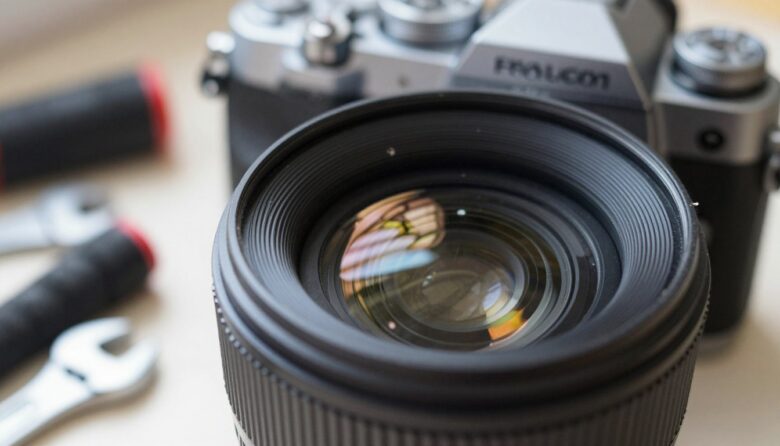
A stuck lens filter is usually a gripping and alignment problem, not a problem that should be solved with maximum force. Thin filter frames can flex when squeezed unevenly, making the threads bind even more tightly.
The safest approach is to begin with clean hands and gentle, evenly distributed pressure. Increase grip gradually, use a correctly sized filter wrench only when necessary, and stop if the frame is bent, the glass is broken, or the lens thread appears damaged.
Safest removal order: release your grip, support the rigid lens barrel, turn the filter counterclockwise with even pressure, add a rubber grip if needed, and move to a proper filter wrench only after the gentler methods fail.
Do not use pliers, screwdrivers, lubricants, open flame, extreme heat, freezing, or the lens hood as a removal lever.
Why Lens Filters Become Stuck
A filter can become difficult to remove for several reasons. Identifying the most likely cause helps you choose an appropriate method without making the problem worse.
| Possible cause | What may have happened | Useful clue | Recommended response |
|---|---|---|---|
| Overtightening | The filter was attached with more force than necessary | The frame looks normal but will not move by hand | Use even pressure, rubber grip, and then a filter wrench |
| Uneven finger pressure | The thin ring flexes slightly and grips the lens thread | The filter becomes tighter when pinched strongly | Relax your grip and distribute pressure around the ring |
| Cross-threading | The filter began at an angle instead of entering the thread squarely | The gap between the filter and lens is uneven | Do not force it; professional removal may be required |
| Impact damage | A drop or collision bent the filter frame | The ring is visibly dented or no longer circular | Stop before the damaged frame scratches or distorts the lens thread |
| Sand, salt, or debris | Particles entered the threaded connection | The ring feels gritty or turns slightly and stops | Avoid grinding the particles deeper; seek service if movement is rough |
| Stacked filters or adapters | Two thin rings tightened against one another | The complete stack rotates instead of one connection separating | Use two correctly sized filter wrenches to control each ring |
| Rotating filter design | The front section of a CPL or variable ND rotates independently | The front turns but the filter remains attached | Grip the narrow fixed ring closest to the lens |
A tighter grip is not always a stronger grip. Squeezing a thin filter from only two opposite sides can make the circular frame slightly oval, increasing friction against the lens thread.
Prepare the Lens Before Trying Again
- Move to a clean and well-lit area. Work above a padded table rather than holding expensive equipment over a hard floor.
- Turn the camera off. Remove the strap from your wrist or clear anything that could pull the camera unexpectedly while you work.
- Let the equipment reach a normal room temperature. If the lens has just come from a very hot vehicle or freezing outdoor conditions, allow it to stabilize naturally before attempting removal.
- Inspect the filter from the side. Look for dents, cracked glass, an uneven gap, exposed threads, or signs that the ring was attached at an angle.
- Remove loose surface debris. Use a manual bulb blower around the outside of the filter. Do not push a brush, liquid, or sharp object into the threaded gap.
- Identify the fixed ring. On a variable ND or circular polarizer, the front section rotates during normal use. The narrow rear ring closest to the lens is the section that must unscrew.
- Support the lens correctly. Hold a rigid section of the lens barrel. Avoid twisting against the zoom ring, focus ring, extending barrel, or camera mount.
Do not continue with home removal methods if the filter glass is cracked. Loose shards can scratch the front element or injure your hands. Keep the lens pointed downward, avoid touching the broken glass, and take it to a qualified camera repair service.
Method 1: Gentle, Even Hand Pressure
Begin without tools. Dry your hands and place your fingertips around as much of the filter’s outer edge as possible.
- Relax your previous grip. If you have already been squeezing the filter tightly, release it completely for a moment.
- Place several fingertips around the ring. Spread the contact points instead of gripping only the left and right sides.
- Support the rigid lens barrel. Keep the lens steady without applying twisting force through the camera body.
- Turn slowly counterclockwise. Use smooth pressure without jerking, rocking, or bending the filter.
- Stop if resistance increases. Repeatedly forcing the same unsuccessful grip can flex the ring and tighten the bind.
Useful sign: If the filter begins moving smoothly after the first small turn, continue supporting it until it is completely free. Do not allow a heavy filter to fall from the lens when the final thread releases.
Method 2: Add a Rubber Grip
A clean rubber grip increases friction without requiring the sharp jaws of a metal tool. Suitable options include a broad rubber band, a clean silicone grip sheet, or a rubber jar-opening pad.
Wide Rubber Band
Wrap one wide band around the fixed filter ring. Keep it away from the lens barrel so it grips only the part that must rotate.
Silicone Grip Sheet
Fold the clean sheet around the ring and use several fingers to spread pressure evenly across the circumference.
Variable ND Filter
Place the rubber on the fixed rear ring. Gripping only the wide rotating front section will change density without removing the filter.
Avoid Contaminated Rubber
Do not use a grip covered with sand, grease, metal particles, or household cleaning residue near the lens.
Apply moderate, continuous pressure and turn counterclockwise. If the rubber slips, reposition it instead of immediately squeezing harder.
Method 3: Use a Proper Filter Wrench
A filter wrench is designed to grip the narrow outer frame of a photographic filter. Plastic or rubberized models are available in different diameter ranges.
Select a wrench that fits the actual filter diameter. A wrench that is much too large may apply uneven pressure, while one that is too small may not seat correctly.
- Confirm the filter size. Check the diameter marked on the filter or lens, such as 67 mm, 77 mm, or 82 mm.
- Place the wrench around the fixed filter ring. Make sure it is not resting on the lens barrel, front element, or rotating VND section.
- Keep the wrench square. It should sit evenly around the ring rather than pulling upward from one side.
- Support the lens barrel. Do not allow the removal force to twist the lens mount against the camera body.
- Apply slow counterclockwise pressure. Use the wrench for grip, not for a sudden high-torque movement.
- Finish by hand when possible. Once the filter loosens, remove the wrench and unscrew the remaining threads gently with your fingers.
A filter wrench should reduce the force you need, not encourage you to use extreme force. If the ring still refuses to move with controlled pressure, stop before the lens thread or filter frame is damaged.
How to Separate Two Stuck Filters
When two filters or an ND filter and step-up ring are stuck together, turning one ring may rotate the entire stack. Two filter wrenches can isolate the correct connection.
| Situation | First wrench | Second wrench | Movement |
|---|---|---|---|
| Two filters stuck together | Hold the lower filter steady | Grip the upper filter | Turn the upper filter counterclockwise |
| Filter stuck to a step-up ring | Hold the step-up ring | Grip the filter | Turn the filter counterclockwise |
| Step-up ring stuck to the lens | Support the rigid lens barrel by hand | Grip the adapter ring | Turn the adapter counterclockwise |
| CPL or VND stuck to the lens | Support the lens barrel | Grip the fixed rear filter ring | Do not rely on the rotating front ring |
Position both wrenches so their pressure is parallel to the filter faces. Pulling the tools in different directions can tilt the rings and increase binding.
What Not to Use on a Stuck Filter
Online removal tricks may appear successful on inexpensive or already damaged filters, but a method that bends, cuts, heats, freezes, or strikes the ring can turn a minor inconvenience into a lens repair.
Special Case: A Dented Filter Ring
A filter damaged by a drop or collision may no longer be circular. Turning a dented frame can scrape the lens thread, tighten the deformation, or push broken glass toward the front element.
Stop home removal attempts when:
- The frame has a visible flat spot or deep dent
- The glass is cracked, loose, or missing pieces
- The filter sits at a clear angle on the lens
- The ring moves unevenly and produces a grinding sensation
- The front portion of the lens also appears bent
- The filter was damaged during a significant fall or impact
A camera technician can remove or cut a damaged frame while protecting the lens thread and front element. This is safer than attempting to reshape the ring while it remains attached.
Special Case: Cross-Threaded Filters
Cross-threading occurs when the filter starts at an angle and its thread does not follow the lens thread correctly. The filter may appear tilted or have a wider gap on one side.
Do not try to “straighten” it by tightening farther. Additional rotation can damage both sets of threads.
Safer decision: If a filter is visibly cross-threaded and does not release with very gentle hand pressure, take the lens to a repair service. Preserving the lens thread is more important than saving the filter.
Special Case: Variable ND and Circular Polarizer Filters
Variable ND and circular polarizer filters contain a rotating front section. This design can make removal confusing because the broad front ring may turn normally while the narrow rear mounting ring remains attached to the lens.
- Locate the rear mounting ring. Look for the narrow section immediately next to the lens or step-up ring.
- Keep the rotating front section still when practical. This makes it easier to identify movement at the threaded connection.
- Place the rubber grip or wrench only on the rear ring. Avoid pressing the tool against the optical glass.
- Turn counterclockwise with controlled pressure. Support the lens barrel throughout the movement.
Some VND filters have an oversized front ring. The number printed on the front cap may therefore differ from the rear thread attached to the lens. Choose the wrench based on the ring you actually need to grip.
When to Stop and Seek Professional Help
Stop before the removal attempt begins causing a new problem. Professional service is appropriate when:
What to Check After the Filter Is Removed
- Inspect the lens thread under good light. Look for flattened sections, metal fragments, sand, or damaged thread edges.
- Remove loose debris with a blower. Keep the lens angled downward so particles move away from the front element.
- Inspect the filter separately. Do not reinstall a ring that is bent, cracked, rough, or difficult to thread.
- Test a lens cap before another filter. A cap can help reveal whether the front diameter has been visibly distorted without engaging the filter thread.
- Attach a known-good filter only when the thread appears normal. Begin with almost no pressure and stop immediately if it does not seat squarely.
- Take a test image. Check focus, stabilization, zoom operation, flare, and image sharpness if the lens experienced an impact.
Never use another filter to force damaged threads back into shape. A filter that does not begin smoothly should be removed immediately and the lens inspected.
How to Prevent Filters from Getting Stuck
A Better Filter Installation Routine
- Hold the filter by its outer frame. Avoid fingerprints on the glass and pressure on a rotating section.
- Place it squarely against the lens. Check that the filter face is parallel to the front of the lens.
- Begin turning gently. Do not push the filter inward while searching for the thread.
- Confirm smooth engagement. The first full turn should feel even and require very little force.
- Stop when the filter is lightly secure. Additional tightening does not improve optical performance.
- Test removal immediately. Unscrew and reinstall a new ring before leaving home to confirm that its threads fit correctly.
Useful Items for a Camera Bag
Two Filter Wrenches
A pair makes it easier to separate stacked filters or hold an adapter ring while removing a filter.
Clean Rubber Pad
Provides extra friction without adding sharp edges near the lens.
Manual Bulb Blower
Removes loose dust from filter and adapter threads without adding moisture.
Padded Filter Case
Prevents rings from being dented or damaged by loose accessories inside the bag.
Frequently Asked Questions
Which direction removes a lens filter?
When looking directly at the front of the lens, turn a normal screw-in filter counterclockwise to remove it.
Why does squeezing the filter make it harder to remove?
A thin metal frame can flex when pressure is concentrated on two sides. This may make the ring slightly oval and increase friction against the lens thread. Use lighter pressure distributed around the ring.
Can I use pliers if I cover them with cloth?
This is not recommended. Pliers still concentrate force on small areas and can bend the frame, break the glass, or slip toward the lens.
Is it safe to use a hair dryer?
Concentrated heat is unnecessary for ordinary removal and is difficult to control around lens coatings, adhesives, seals, plastics, and electronics. Allow equipment to return naturally to room temperature instead.
Can I put lubricant around the filter thread?
No. Oil and penetrating fluid can migrate into the lens, contaminate optical surfaces, collect dust, and make later service more difficult.
Why does my variable ND rotate but not come off?
You may be turning its normal adjustment ring. Locate and grip the narrow fixed mounting ring closest to the lens, then turn that section counterclockwise.
Can two filter wrenches be used together?
Yes. One wrench can hold the lower filter or adapter steady while the second turns the upper filter. Keep both tools parallel and apply controlled pressure.
What should I do if the filter glass is cracked?
Stop handling the front glass, keep the lens pointed downward, and seek professional repair. Trying to remove a broken filter by hand can push fragments against the lens.
Should I remove the lens from the camera first?
Either arrangement requires careful support. Removing the lens can make it easier to work above a padded surface, but the rear cap should be installed immediately. Whether attached or removed, support a rigid part of the lens barrel and avoid twisting the camera mount.
When is professional removal the better choice?
Seek help when the filter is dented, broken, cross-threaded, gritty, attached after an impact, or still immovable after gentle grip and a correctly sized wrench.
Final Recommendation
Patience and evenly distributed grip are safer than additional force. Begin by supporting the lens correctly and loosening your grip, then progress from dry hands to rubber grip and finally to a proper filter wrench.
Stop if the ring is bent, the glass is cracked, the filter is cross-threaded, or the lens barrel begins to move. A replaceable filter is never worth risking the front element, lens thread, or internal alignment of the lens.

The OptiFilter Labs Editorial Team creates practical, carefully researched content about ND filters, camera accessories, exposure control, photography techniques, and video production. Our goal is to help photographers and filmmakers understand their equipment, solve common problems, and make more informed purchasing decisions.